

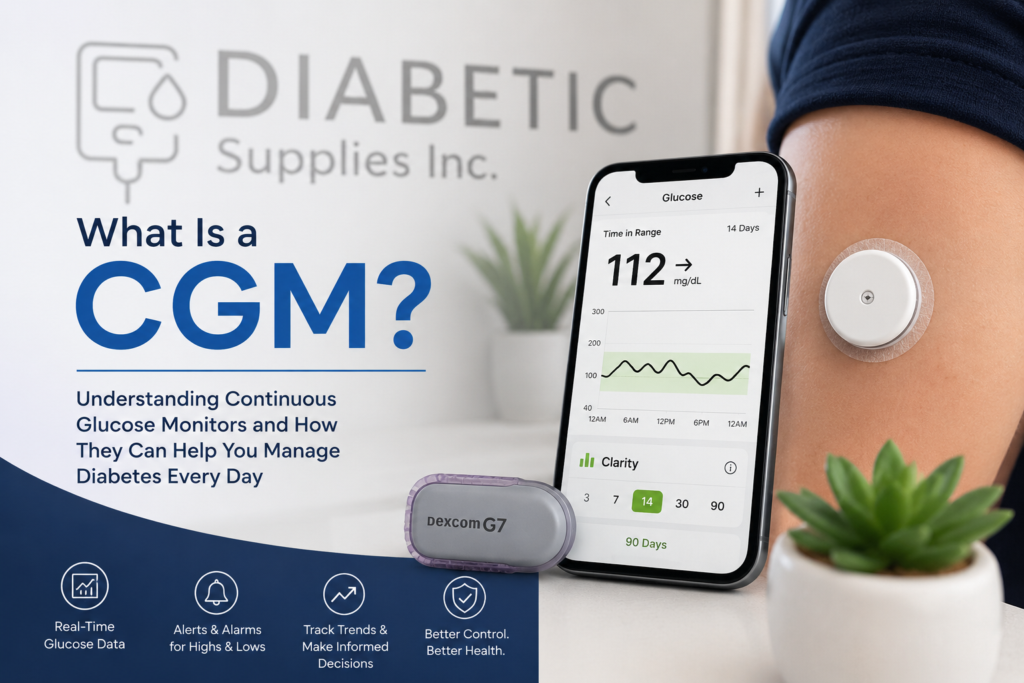
This educational article explains what a Continuous Glucose Monitor (CGM) is, how it works, and how it differs from traditional fingerstick blood glucose testing. The article covers CGM technology, including the sensor, transmitter, and smartphone app or receiver. It also discusses the difference between real-time and scanned CGMs, implantable versus transcutaneous CGMs, Medicare and insurance coverage, qualification requirements, benefits of CGM therapy, trend arrows, alerts, and practical maintenance tips.
What Is a Continuous Glucose Monitor (CGM)?
Managing diabetes requires understanding how your blood glucose levels change throughout the day. A Continuous Glucose Monitor (CGM) is a small wearable device that helps people with diabetes monitor their glucose levels in real time without relying solely on fingerstick testing.
CGMs have transformed diabetes management by providing continuous insights, trend data, and alerts that help individuals make informed decisions about food, exercise, medications, and insulin therapy.
How Does a CGM Work?
A CGM is a wearable device that tracks glucose levels throughout the day and night. Unlike traditional blood glucose meters that provide a single reading at a specific moment, CGMs continuously measure glucose levels and send updates every few minutes.
CGMs help users identify patterns, recognize trends, and take action before blood sugar levels become dangerously high or low.
A CGM system typically consists of three main components:
1. The Sensor
The sensor is a small device inserted just beneath the skin, usually on the arm or abdomen. It measures glucose levels in the interstitial fluid, which is the fluid found between the body’s cells.
2. The Transmitter
The transmitter collects data from the sensor and wirelessly sends the information to a receiver or smartphone app.
3. The Receiver or Smartphone App
The receiver or mobile app displays glucose readings, trend arrows, historical data, alerts, and reports that help users better understand their glucose levels.
Understanding the Technology
One important thing to understand is that CGMs do not measure glucose directly from the bloodstream.
Instead, they measure glucose in the interstitial fluid between cells. Because of this, CGM readings may lag behind actual blood glucose levels by approximately 5 to 15 minutes.
This delay is especially important to remember when treating low blood sugar episodes. If symptoms of low blood sugar occur but the CGM reading appears normal, it may be helpful to verify glucose levels with a traditional blood glucose meter.
CGM vs. Fingerstick Blood Glucose Meters
Traditional blood glucose meters require a fingerstick blood sample and provide a single glucose reading at that specific moment.
CGMs offer several advantages:
- Continuous glucose readings throughout the day
- Trend information showing whether glucose is rising or falling
- Alerts for high and low glucose levels
- Reduced need for frequent fingersticks
- Better understanding of glucose patterns
While fingerstick testing may still be needed occasionally, CGMs provide a more complete picture of glucose management.
Types of Continuous Glucose Monitors
Real-Time CGMs (rtCGMs)
Real-time CGMs automatically send glucose readings to a smartphone or receiver every few minutes.
Examples include:
- Dexcom systems
- Medtronic Guardian systems
These devices continuously update glucose information without requiring any user action.
Intermittently Scanned CGMs (isCGMs)
Intermittently scanned CGMs require users to scan the sensor using a reader or smartphone to view glucose readings.
Examples include:
- FreeStyle Libre systems
Users receive glucose information whenever they scan the sensor.
Implantable CGMs
Most CGM sensors are worn on the skin and replaced every 7 to 14 days.
However, implantable CGMs such as Eversense are inserted under the skin by a healthcare provider and can last up to six months before replacement.
Who Qualifies for a CGM?
CGMs are commonly prescribed for individuals with:
- Type 1 diabetes
- Type 2 diabetes using insulin therapy
- Frequent episodes of low blood sugar
- Hypoglycemia unawareness
- Difficulty maintaining target glucose levels
- Gestational diabetes in certain situations
Eligibility requirements can vary depending on insurance coverage and medical necessity.
A healthcare provider will determine whether a CGM is appropriate based on an individual’s diabetes management needs.
Costs and Insurance Coverage
Durable Medical Equipment (DME)
CGMs are generally classified as Durable Medical Equipment (DME). Costs can vary depending on the manufacturer, model, insurance coverage, and replacement schedule.
Medicare and Private Insurance
Many Medicare plans and private insurance companies provide coverage for CGMs when medical necessity requirements are met.
Coverage often includes individuals who:
- Have diabetes
- Use insulin therapy
- Require frequent glucose monitoring
- Meet specific documentation requirements
Patients should consult their healthcare provider and insurance company for the most current eligibility guidelines.
Out-of-Pocket Costs
Individuals who want a CGM for general wellness, fitness tracking, or prediabetes management may not qualify for insurance coverage.
In these situations, costs may be paid out-of-pocket and can vary significantly depending on the device and subscription services selected.
Benefits of Using a CGM
CGMs provide several important benefits:
Better Glucose Visibility
Users can see how meals, exercise, medications, stress, and sleep affect glucose levels.
Fewer Fingersticks
Many users significantly reduce the number of daily fingerstick tests required.
Improved Diabetes Management
Continuous data helps users and healthcare providers make more informed treatment decisions.
Increased Safety
Alerts and alarms can notify users of potentially dangerous high or low glucose levels before symptoms become severe.
Greater Peace of Mind
Many individuals feel more confident managing diabetes when they can monitor glucose levels throughout the day and night.
Understanding Trend Arrows
CGMs provide more than just a glucose number.
Trend arrows indicate whether glucose levels are:
- Stable
- Rising slowly
- Rising rapidly
- Falling slowly
- Falling rapidly
These trends help users make proactive decisions before glucose levels become problematic.
Alerts and Alarms
Most CGMs allow users to customize alerts and alarms.
These notifications can warn users when:
- Glucose is too high
- Glucose is too low
- Glucose is rising rapidly
- Glucose is dropping rapidly
These early warnings allow individuals to take action before a serious situation develops.
Practical Tips and Maintenance
Sensor Insertion
Most users find sensor insertion quick, easy, and virtually painless. The insertion process typically takes only a few minutes.
Preventing Sensors From Falling Off
A common challenge for CGM users is keeping sensors securely attached.
Helpful tips include:
- Clean and dry the skin before application
- Avoid lotions, oils, and creams before insertion
- Press firmly during application
- Use over-patches when recommended
- Consider skin barrier wipes for additional protection
- Avoid placing sensors in high-friction areas
Managing Skin Irritation
Some users may experience skin irritation from adhesives.
Using barrier wipes, protective patches, or discussing alternative products with a healthcare provider can help reduce discomfort.
Final Thoughts
Continuous Glucose Monitors have revolutionized diabetes care by providing real-time information, trend data, and customizable alerts that help individuals better manage their health.
Whether you are newly diagnosed or have been living with diabetes for years, a CGM can provide valuable insights that support safer and more effective glucose management.
If you think you may qualify for a CGM, speak with your healthcare provider to learn more about your options and available insurance coverage.
Need Help Getting Started?
Diabetic Supplies Inc. specializes in Continuous Glucose Monitors, insulin pump supplies, wound care products, urology supplies, and nutritionals. We work with Medicare, Medicaid, and most major insurance plans and help patients navigate the paperwork process from start to finish.
Contact Diabetic Supplies Inc. today to learn more about your options.