

Healthy Bites by Diabetic Supplies Inc.
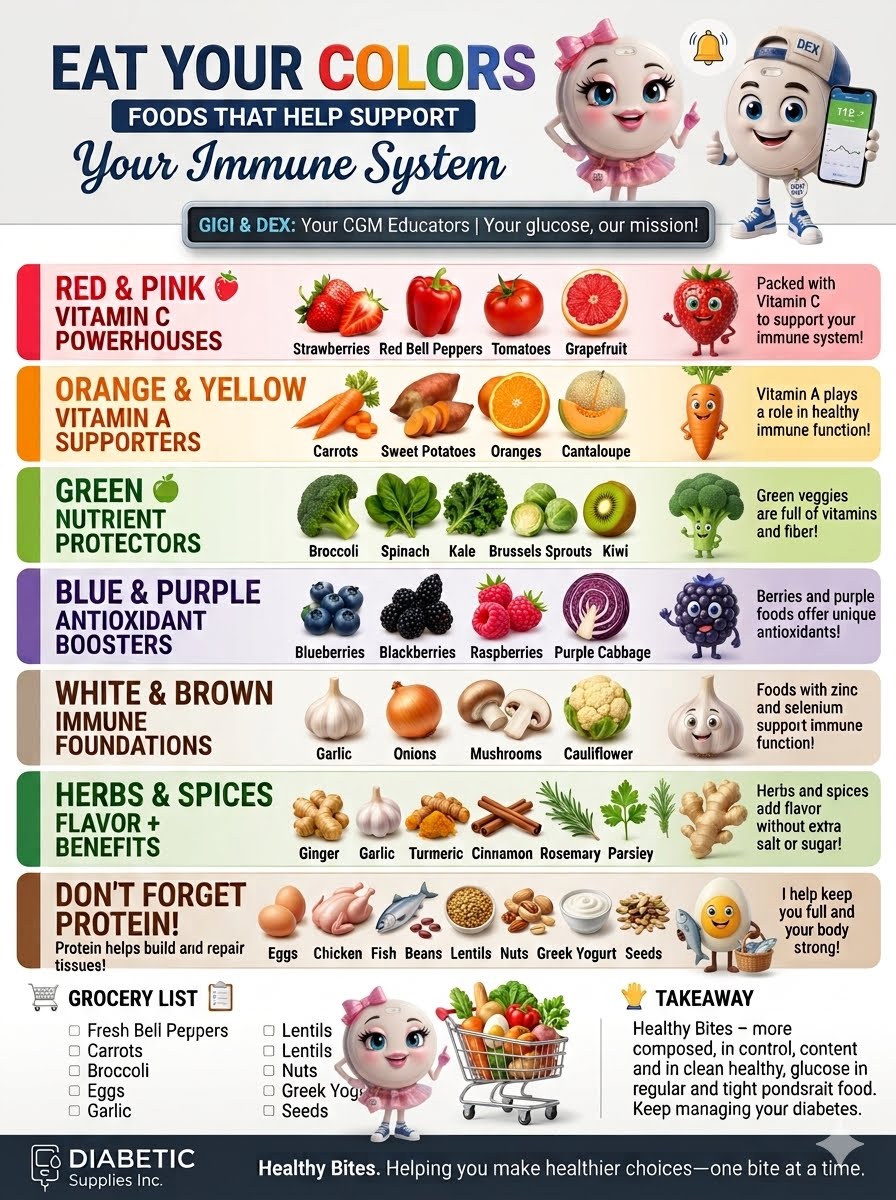
Cold and flu season is a good reminder to take care of your body—but preparing for sickness doesn’t start when you catch a cold. It starts with the everyday choices you make, including the foods you put on your plate.
Your immune system needs a variety of vitamins, minerals, protein, healthy fats, and other nutrients to function properly. For people living with diabetes, eating a balanced diet can also help support blood sugar management, which is an important part of staying healthy. The good news? You don’t need a complicated diet or a cabinet full of supplements.
Start by adding more color to your plate! 🌈
Think in Colors
Different fruits and vegetables provide different vitamins, minerals, antioxidants, and fiber. Eating a variety of colors throughout the week is an easy way to get a wider range of nutrients.
| 🍊 ORANGE & YELLOW: Vitamin A Power Think carrots, sweet potatoes, winter squash, cantaloupe, and mango. Many orange and yellow fruits and vegetables contain carotenoids, including beta-carotene, which your body can convert into vitamin A. Vitamin A plays an important role in maintaining a healthy immune system. Diabetes-friendly idea: Try roasted carrots or a small serving of roasted sweet potato alongside grilled chicken and a green vegetable. |
| 🍓 RED & PINK: Bring on the Vitamin C Strawberries, red bell peppers, tomatoes, and grapefruit are colorful ways to add vitamin C to your meals. Vitamin C is an essential nutrient that plays an important role in immune function. Fruits and vegetables are some of the best food sources of vitamin C. Remember: Whole fruit is generally a better choice than fruit juice because whole fruit provides fiber and tends to have less impact on blood sugar than juice. Try this: Add sliced strawberries to plain Greek yogurt or toss tomatoes and red peppers into a salad. |
| 🥦 GREEN: Don’t Skip Your Veggies Broccoli, spinach, kale, Brussels sprouts, and other leafy green vegetables can bring plenty of nutrients and fiber to your plate. Broccoli and Brussels sprouts are also sources of vitamin C, while leafy green vegetables can provide carotenoids and other nutrients. And here’s a bonus: many nonstarchy vegetables are relatively low in carbohydrates, making them a great foundation for a diabetes-friendly meal. Easy idea: Add a handful of spinach to scrambled eggs, put broccoli in a stir-fry, or make a colorful salad with several different vegetables. |
| 🫐 BLUE & PURPLE: Berry Good Choices Blueberries, blackberries, raspberries, and strawberries can add color, flavor, and fiber to your meals. Instead of reaching for a sugary dessert, try pairing a small serving of berries with a protein-rich food such as plain Greek yogurt or a handful of nuts. Healthy Bites tip: Fresh isn’t your only option! Frozen fruits and vegetables can be convenient, budget-friendly choices too. |
Don’t Forget the Flavor: Herbs & Spices 🧄
Healthy eating doesn’t have to mean boring food! Garlic, ginger, turmeric, cinnamon, parsley, rosemary, and other herbs and spices can add plenty of flavor without relying on large amounts of added sugar or salt.
- 🧄 Garlic to roasted vegetables
- 🌿 Rosemary to chicken or roasted vegetables
- 🫚 Ginger to stir-fries or tea
- 🌿 Parsley to salads and soups
- 🟡 Turmeric to soups, vegetables, or rice dishes
- 🍂 Cinnamon to oatmeal or plain yogurt
One important note: herbs and spices can be delicious additions to a healthy diet, but they shouldn’t be treated as a replacement for medical treatment or as a guaranteed way to prevent illness.
Protein Has a Place on Your Plate Too 🫘
Fruits and vegetables aren’t the only foods that matter. Protein foods such as eggs, chicken, fish, beans, lentils, nuts, seeds, and yogurt provide important nutrients. Foods such as beans, nuts, whole grains, and some animal proteins also provide zinc, a mineral involved in normal immune function.
For people with diabetes, pairing carbohydrate-containing foods with protein, healthy fats, or fiber can also help slow how quickly blood sugar rises.
Try building meals like this:
- ½ plate: Nonstarchy vegetables
- ¼ plate: Lean protein
- ¼ plate: A carbohydrate food
Then add water or another low-calorie beverage. This simple plate method can help you create balanced meals without having to completely eliminate your favorite foods.
Your Cold & Flu Season Grocery List 🛒
Next time you’re at the grocery store, look for a few of these:
Fruits
- Oranges
- Strawberries
- Blueberries
- Blackberries
- Kiwi
- Cantaloupe
Vegetables
- Broccoli
- Spinach
- Kale
- Red bell peppers
- Carrots
- Tomatoes
- Brussels sprouts
- Sweet potatoes
Protein & Other Foods
- Eggs
- Plain Greek yogurt
- Beans
- Lentils
- Nuts
- Seeds
- Fish
- Chicken
Flavor Boosters
- Garlic
- Ginger
- Turmeric
- Cinnamon
- Fresh herbs
Pick a few foods you enjoy and start there.
Healthy Bites Takeaway 💙
There isn’t one magical food that can keep you from getting sick. Your immune system is complicated, and it needs a variety of nutrients to do its job. For people with diabetes, taking care of your health means looking at the whole picture—balanced meals, staying active, getting enough sleep, managing stress, taking medications as prescribed, keeping blood sugar in your target range, and staying up to date on recommended vaccines. So this cold and flu season, don’t wait until you’re sick to start taking care of yourself.
🌈 Eat the rainbow.
🥦 Fill your plate with nourishing foods.
💙 Keep managing your diabetes.
🛒 And make your grocery cart part of your healthy routine.
Healthy Bites by Diabetic Supplies Inc.
Helping you make healthier choices—one bite at a time.
This is for informational purposes only. For medical advice or diagnosis, consult a professional. AI responses may include mistakes.