

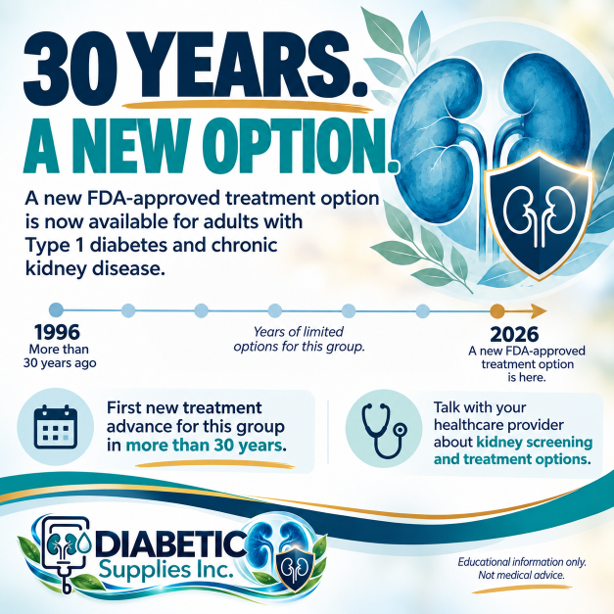
For adults living with type 1 diabetes and chronic kidney disease, a major new treatment option has arrived — and it marks the first advance of its kind in more than three decades.
For years, diabetes technology has moved quickly. Continuous glucose monitors have become smaller, insulin pumps have gotten smarter, and new medications have changed the way many people manage diabetes.
But one area has seen far fewer advances: chronic kidney disease in people with type 1 diabetes.
That changed in September 2026, when the U.S. Food and Drug Administration expanded its approval of Kerendia® (finerenone) for adults with chronic kidney disease associated with type 1 diabetes.
According to Bayer, it is the first new FDA-approved treatment option in more than 30 years specifically for this group of patients.
Why Kidney Health Matters in Type 1 Diabetes
Your kidneys work around the clock filtering waste and extra fluid from your blood.
Over time, diabetes can damage the small blood vessels in the kidneys, making it harder for them to do their job. This can lead to chronic kidney disease, or CKD.
Approximately 20% to 30% of people in the United States with type 1 diabetes also develop chronic kidney disease, according to data cited by Bayer.
One of the challenges is that kidney disease can develop quietly.
Early chronic kidney disease often causes few or no noticeable symptoms, which is why routine testing can be so important. Two of the main tests healthcare providers use are:
UACR — urine albumin-to-creatinine ratio: This checks for albumin, a protein that can leak into the urine when the kidneys are damaged.
eGFR — estimated glomerular filtration rate: This blood-test calculation helps show how well the kidneys are filtering blood.
These two measurements are key tools for detecting and monitoring chronic kidney disease.
So, What Is Kerendia?
Kerendia, also known by its generic name finerenone, is a prescription medication designed to help protect the kidneys and cardiovascular system.
It belongs to a class of medications called non-steroidal mineralocorticoid receptor antagonists, or MRAs.
While that name sounds complicated, the important part is what the new approval means:
Adults with type 1 diabetes and chronic kidney disease now have an additional treatment option specifically approved to address kidney damage associated with their condition.
The FDA approved Kerendia for these patients to reduce UACR — a marker of kidney damage — with that reduction expected to help lower the risk of continued kidney-function decline and end-stage kidney disease.
What Did Researchers Find?
The new approval was supported by the Phase 3 FINE-ONE clinical trial, which included 242 adults with type 1 diabetes and chronic kidney disease.
Participants received either finerenone or a placebo in addition to their standard care.
Researchers then looked closely at changes in UACR.
The results were encouraging.
After six months, patients taking Kerendia had a 28% greater reduction in UACR compared with placebo. Improvements were seen as early as the third month and continued through month six.
Why does that matter?
When albumin levels in the urine decrease, it can be a sign that treatment is helping reduce stress and damage to the kidneys. UACR is an important marker doctors use when following chronic kidney disease over time.
This Is Big News — But It Doesn’t Replace Regular Kidney Care
A new medication does not mean kidney monitoring becomes less important.
Actually, it makes knowing your kidney numbers even more valuable.
People with diabetes should talk with their healthcare providers about kidney screening and know whether their UACR and eGFR are being monitored.
Because early kidney disease may not cause obvious symptoms, a person can feel perfectly fine while changes are already happening. Blood and urine testing can help identify those changes earlier.
What About Side Effects?
Like all prescription medications, Kerendia is not appropriate for everyone.
One important risk is hyperkalemia, or high potassium levels in the blood.
In the FINE-ONE trial, hyperkalemia occurred more often in people receiving Kerendia than in those receiving placebo. Because of this risk, healthcare providers may need to check potassium levels and kidney function when deciding whether the medication is appropriate and while a patient is being treated.
Patients should never start, stop, or change a prescription medication without speaking with their healthcare provider.
Why This Approval Matters
For people living with type 1 diabetes, protecting the kidneys is an important part of long-term diabetes care.
And while CGMs, insulin pumps, automated insulin delivery systems, and improved insulin therapies have transformed diabetes management, treatment options specifically targeting chronic kidney disease in type 1 diabetes have remained limited.
That is what makes this approval significant.
After more than 30 years, patients and healthcare providers now have another tool to consider when managing type 1 diabetes and chronic kidney disease.
It is also a reminder that diabetes management is about more than today’s glucose number.
Knowing your numbers, keeping regular medical appointments, monitoring kidney health, and using the diabetes technology and supplies recommended by your healthcare team can all play a role in protecting your health for the future.
The Bottom Line
The FDA’s 2026 approval of Kerendia for adults with chronic kidney disease associated with type 1 diabetes represents an important milestone.
It does not cure chronic kidney disease, and it will not be the right treatment for everyone. But after decades with limited options specifically studied and approved for this population, a new option is finally here.
And sometimes, medical progress is worth celebrating — especially when patients have been waiting more than 30 years for it.
This article is for educational purposes only and is not intended to replace medical advice. Talk with your healthcare provider about kidney screening, your individual risk factors, and whether any treatment discussed here may be appropriate for you.
Sources: U.S. FDA approval information reported by Bayer; FINE-ONE Phase 3 clinical trial data; National Institute of Diabetes and Digestive and Kidney Diseases; diaTribe.