

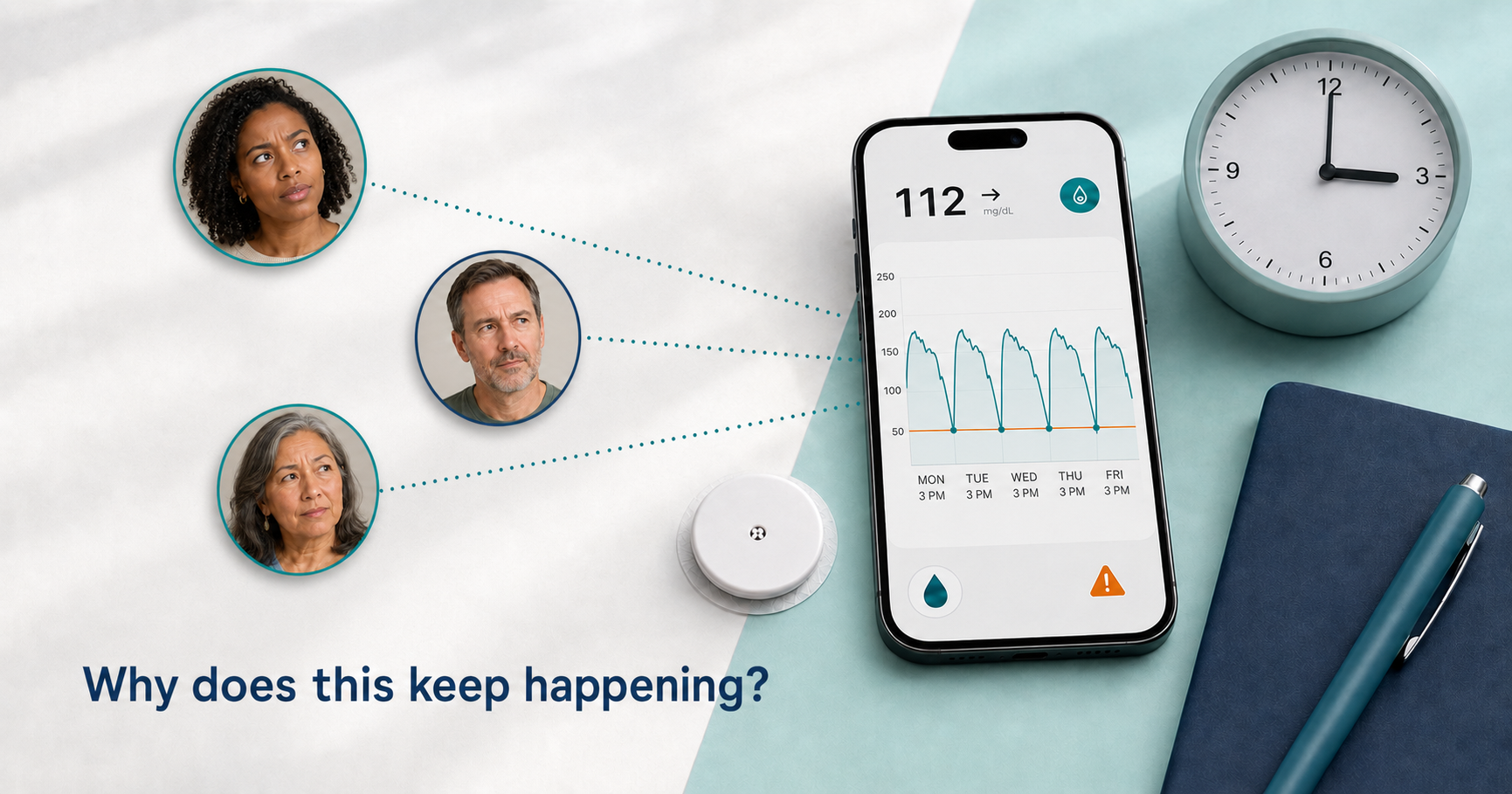
Short summary: If your blood sugar tends to drop around the same time each day, it may not be random. Learn how continuous glucose monitor data can help you and your healthcare provider identify patterns involving meals, medication, exercise, and sleep.
One low blood sugar reading may feel unexpected. But if your glucose drops before lunch, during your afternoon commute, after exercise, or overnight on a regular basis, your body may be showing you a pattern.
A continuous glucose monitor does more than display your current glucose level. It records glucose changes throughout the day and night, allowing you to review several hours or days of information and spot trends that may otherwise be difficult to notice.
Why Recurring Lows Matter
Hypoglycemia, or low blood sugar, is generally defined as a glucose level below 70 mg/dL. It is more common among people who take insulin or certain diabetes medications.
Occasional lows can happen, but repeated lows deserve attention. They may indicate that something in your daily routine, medication schedule, meal timing, or activity level needs to be reviewed with your healthcare provider.
Do not change your insulin or other medications on your own. Instead, use the information from your CGM to help your healthcare team understand what is happening.
What Can Cause Blood Sugar to Drop at the Same Time?
Many factors can affect glucose levels. The time of a recurring low may provide clues about what is contributing to it.
Lows Before Breakfast
Overnight or early-morning lows may be connected to:
- Evening insulin or medication timing
- Physical activity earlier in the day
- Eating less than usual at dinner
- Drinking alcohol without enough food
- Going a long time without eating
- Changes in sleep, stress, or illness
CGM alerts can be especially helpful overnight because you may not wake up or notice the usual symptoms of hypoglycemia.
Lows Before Lunch
If your glucose regularly drops during the late morning, consider what happens between breakfast and lunch.
Possible factors may include:
- Skipping breakfast
- Eating fewer carbohydrates than usual
- Taking diabetes medication without eating enough
- Delaying lunch
- Being more physically active during the morning
- A change in your normal work schedule
The goal is not to blame a particular food or activity. Instead, look for events that repeatedly happen before the low.
Afternoon Lows
Afternoon lows may occur after lunch, during work, or while commuting home. Possible contributors include:
- A lighter-than-usual lunch
- A long gap between lunch and dinner
- Insulin or medication timing
- Walking or other physical activity
- Household chores or an active job
- Exercise completed earlier in the day
Physical activity can affect glucose during exercise and for hours afterward. Your healthcare team can help you decide whether you need to adjust meal timing, activity plans, or medication.
Evening or Overnight Lows
If lows happen after dinner or while you are sleeping, review your evening routine. Think about:
- What time you ate dinner
- How much you ate
- When you took insulin or medication
- Whether you exercised that day
- Whether you drank alcohol
- Your glucose level and trend arrow before bed
A recurring nighttime low should always be discussed with your healthcare provider. Adding a bedtime snack may help some people, but it is not the correct solution for everyone.
Look Beyond a Single CGM Number
A single glucose reading tells you what is happening at one moment. CGM history can show what happened before and after that moment.
The National Institute of Diabetes and Digestive and Kidney Diseases explains that CGMs allow people to review how glucose changes over several hours or days and identify trends.
When reviewing your CGM information, look for:
- The time the low began
- How quickly your glucose was falling
- Whether it happened before or after eating
- Whether it followed physical activity
- Whether the same pattern happened on multiple days
- How long your glucose remained low
- What helped your glucose return to your target range
Trend arrows can also provide helpful information about the direction and speed of glucose changes. Because CGM systems may display and interpret arrows differently, follow the instructions for your specific device.
Try a Five-Day Pattern Check
If you notice that your glucose is dropping around the same time each day, keep a simple record for five days. Write down:
- The time of the low
- Your CGM reading and trend arrow
- When and what you last ate
- When you took insulin or other diabetes medication
- Recent exercise or physical activity
- Any changes in sleep, stress, illness, or alcohol use
- Symptoms you experienced
- How you treated the low
According to the Centers for Disease Control and Prevention, food, medication, and physical activity can all cause glucose levels to change throughout the day. Recording these details may make it easier for you and your healthcare provider to identify a connection.
What Should You Do With the Pattern?
Bring your CGM report and notes to your healthcare provider. They can review the timing and decide whether changes may be needed in your:
- Insulin or medication plan
- Meal timing
- Carbohydrate intake
- Exercise routine
- CGM alert settings
- Overnight diabetes plan
Do not purposely skip medication, change an insulin dose, or repeatedly add extra food without speaking with your healthcare team. Covering every recurring low with additional snacks could temporarily raise your glucose without addressing the reason the lows are occurring.
When Your Symptoms and CGM Reading Don’t Match
If you feel symptoms of low blood sugar but your CGM reading does not match how you feel – or if you believe the sensor reading may be inaccurate – follow the instructions for your specific CGM. You may need to confirm the result with a blood glucose meter.
Never ignore symptoms such as shakiness, sweating, dizziness, confusion, weakness, or difficulty concentrating.
Treat an Active Low Right Away
Pattern tracking is meant to help prevent future lows. It does not replace immediate treatment.
If your glucose is below 70 mg/dL, follow the hypoglycemia treatment plan provided by your healthcare professional. General treatment commonly involves fast-acting carbohydrates and rechecking your glucose after 15 minutes.
For more information about symptoms, the 15-15 rule, emergency glucagon, and severe hypoglycemia, read Low Blood Sugar: Hypoglycemia 101.
Emergency note: If someone is unconscious, having a seizure, or unable to swallow, do not give them food or drinks. Use glucagon if available and call 911 for emergency assistance.
The Takeaway
A low that occurs at the same time every day may not be random. CGM data can help reveal connections between glucose levels, meals, medication, activity, and sleep.
The most important step is to share recurring patterns with your healthcare provider. Together, you can decide whether your diabetes management plan needs to be adjusted.
Diabetic Supplies Inc. helps eligible patients obtain continuous glucose monitors and related diabetes supplies while assisting with insurance paperwork and convenient home delivery. To learn more, call 1-800-231-3214 or visit Diabetic Supplies Inc.
This article is for general educational purposes only and does not replace professional medical advice, diagnosis, or treatment. Always follow your healthcare provider’s instructions for monitoring and treating low blood sugar.