

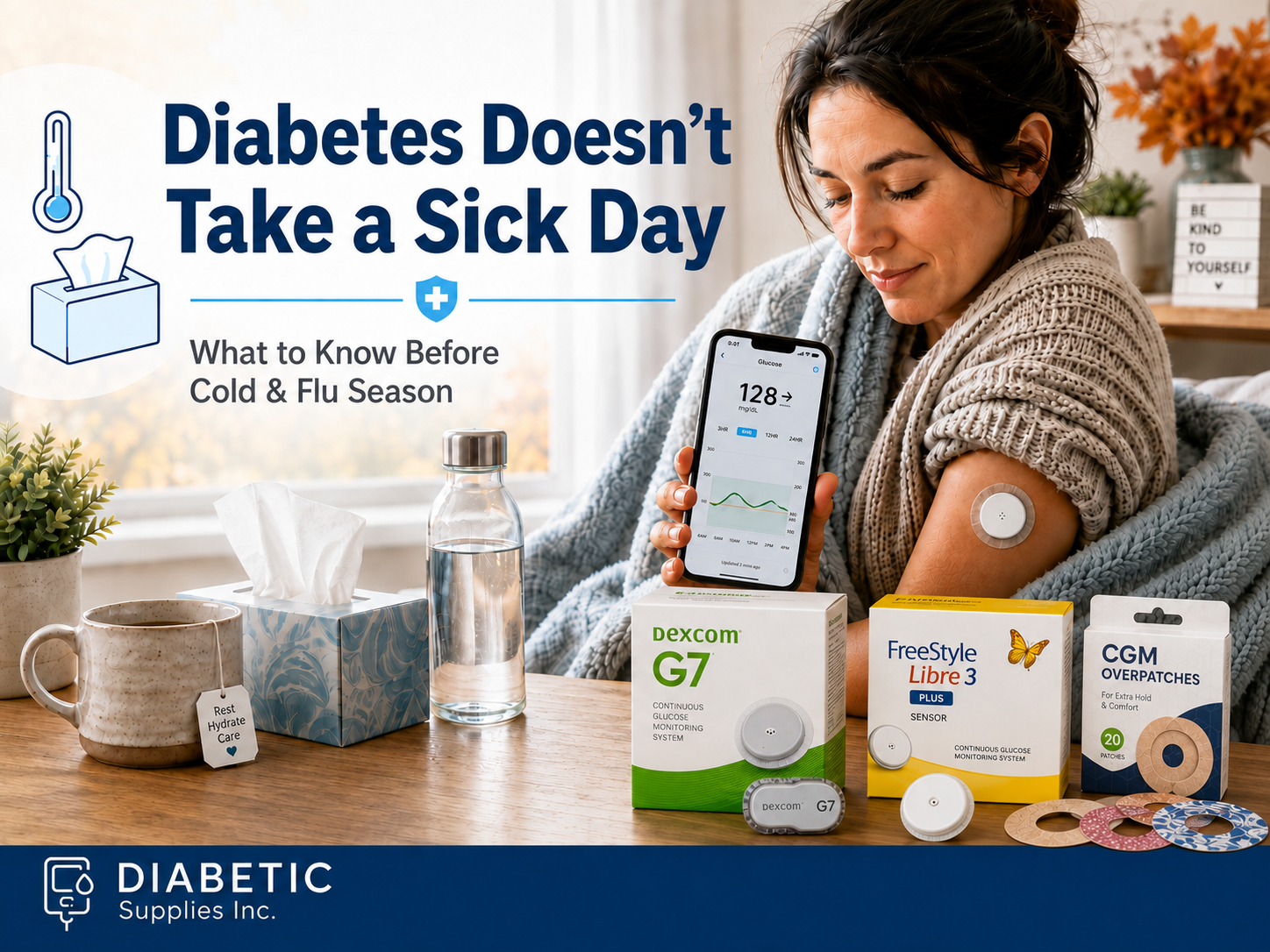
A little preparation now can make managing diabetes much easier when you are not feeling your best.
Cold and flu season is coming, and nobody plans to get sick. But when you are living with diabetes, a runny nose, fever, stomach bug, or case of the flu can affect more than just how you feel.
Illness can also affect your blood sugar.
Even if you are eating less than usual, your glucose may rise. Other times, poor appetite, vomiting, or changes in your normal routine may cause your glucose to drop. That is why having a plan before you get sick can make such a difference.
At Diabetic Supplies Inc., we believe diabetes care should fit into real life – including the days when real life means pajamas, tissues, soup, and plenty of rest.
Why Can Being Sick Affect Blood Sugar?
When your body is fighting an infection or illness, it releases stress hormones to help protect you. Those hormones can also make it harder for insulin to do its job, which may cause blood glucose levels to rise.
At the same time, being sick may mean:
- You are eating less than normal.
- You are drinking less.
- You are sleeping more.
- Your normal activity level changes
- You are taking cold or flu medications.
- You are dealing with fever, vomiting, or diarrhea.
All these changes can affect your usual diabetes routine. People with diabetes can also be at higher risk of serious complications from the flu, which makes preparation especially important.
Watch Your Numbers a Little More Closely
Your usual diabetes routine may need some extra attention when you are sick.
If you use a continuous glucose monitor (CGM), keep an eye on your readings and trends. Your glucose may behave differently than it normally does.
If you use a traditional glucose meter, your healthcare provider may recommend checking more frequently during an illness.
Technology is incredibly helpful, but having a backup glucose meter and testing supplies available is a smart part of any sick-day plan.
Your personal sick-day instructions should always come from your healthcare provider, especially when it comes to medications, insulin adjustments, and how often you should check your glucose.
Don’t Forget About Hydration
When you are sick, it can be easy to forget to drink – especially if you are sleeping more or do not have much of an appetite.
But dehydration can become a critical concern.
Keep water and other provider-approved fluids nearby and take small, frequent sips if drinking a full glass feels difficult. Your diabetes care team can also help you plan what fluids and foods may be appropriate if vomiting or diarrhea makes normal eating difficult.
Build Your Diabetes Sick-Day Kit Before You Need It
You probably already have a medicine cabinet. But do you have a sick-day kit for diabetes?
It does not have to be complicated. Consider keeping commonly needed items together so you or a family member can easily find them.
- Blood glucose meter and testing supplies
- Extra batteries or charging supplies.
- CGM sensors and related supplies
- Insulin pump supplies, if applicable
- Ketone testing supplies, if recommended by your healthcare provider
- Fast-acting glucose, such as glucose tablets or gel
- Thermometer
- A current medication list
- Your doctor’s contact information
- Insurance information
- Hydration options
- Doctor-approved cold or flu medications
- Easy-to-eat foods for sick days.
If you use insulin or other prescription medications, talk with your healthcare provider about what you should have available and what you should do if you become sick. The best time to build your sick-day kit is when you are feeling well – not when you are already sick.
Don’t Wait Until Your Last Sensor or Pump Supply
Imagine waking up with the flu and realizing you are wearing your last CGM sensor.
Or discovering that you are running low on pump supplies when leaving the house is the last thing you feel like doing.
That is one stress you may be able to avoid.
As cold and flu season approaches, take a few minutes to check your diabetes supplies.
- How many sensors do I have left?
- Do I have enough pump or infusion supplies?
- Do I have backup testing supplies?
- Are my batteries or chargers working?
- Is it almost time to reorder?
- Is my prescription current?
- Has my insurance information changed?
Reordering on time can help prevent an already difficult sick day from becoming even more stressful.
What About Ketones?
For some people with diabetes – particularly people who use insulin – illness can increase the risk of developing ketones and diabetic ketoacidosis, or DKA.
DKA is a serious medical emergency.
Your healthcare provider should tell you whether you need to check ketones when you are sick, when to test, and what results require medical attention. Symptoms such as trouble breathing, persistent vomiting, confusion, fruity-smelling breath, or other signs of DKA require prompt medical attention.
Know When It’s Time to Call for Help!
Not every cold requires a trip to the doctor, but diabetes can make some illnesses more complicated.
Before cold and flu season, talk with your healthcare provider about your personal sick-day rules, including:
- How often do you check your glucose.
- When to check ketones
- What to eat or drink if you cannot eat normally
- What to do with your diabetes medications
- Which over-the-counter medications are appropriate for you
- When should you call the office
- Which symptoms mean you should seek emergency care
Having these instructions written down means you will not have to figure everything out while you are sick.
Give Future You One Less Thing to Worry About
Living with diabetes already requires planning.
Cold and flu season should not catch you completely off guard.
Check your supplies. Build your sick-day kit. Save your healthcare provider’s number. Know your plan. And most importantly, do not wait until you are sick to start preparing.
Cold and flu season may be unpredictable. Your diabetes supplies do not have to be.
Contact Diabetic Supplies Inc. to learn more about available diabetes supplies, insurance coverage, and home delivery.
Educational Disclaimer: This article is for educational purposes only and is not a substitute for medical advice. Always follow the sick-day plan provided by your doctor or diabetes care team.
General references: American Diabetes Association sick-day guidance; CDC flu guidance for people with diabetes.