

Diabetes technology continues to change, and a recent U.S. Food and Drug Administration (FDA) authorization has brought attention to an important part of diabetes management that is often discussed separately from blood sugar: ketones.
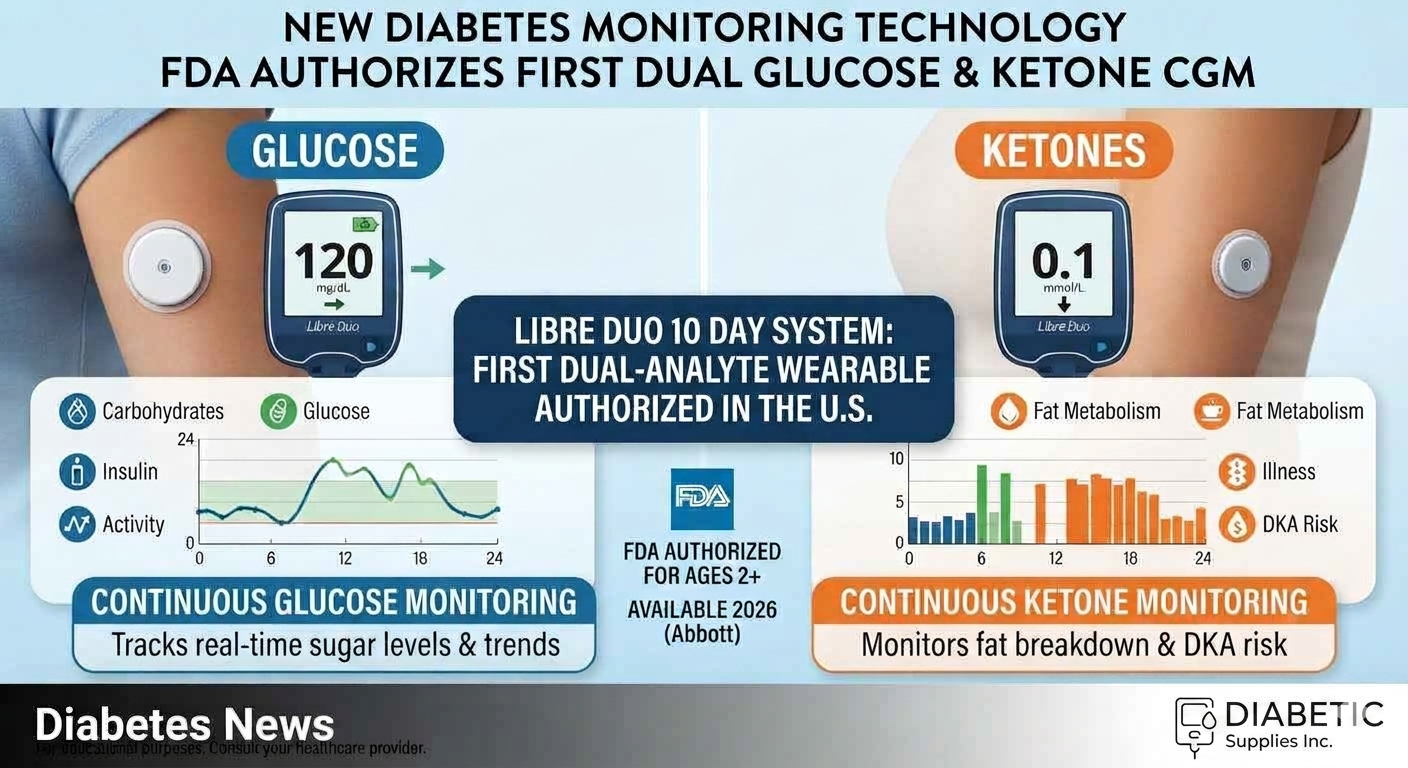
On August 25, 2026, the FDA authorized the Libre Duo 10 Day Continuous Dual Glucose Ketone Monitoring System for people ages 2 and older who are living with diabetes. According to the FDA, it is the first wearable device in the United States authorized to continuously monitor ketones and the first in the world designed to continuously monitor both glucose and ketones in a single device. So, what does that actually mean? And perhaps more importantly, why should people with diabetes know about it? Let’s take a look.
What Does a CGM Usually Monitor?
Continuous glucose monitors, commonly called CGMs, are designed to track glucose levels throughout the day. A small sensor is worn on the body and measures glucose in the fluid just beneath the skin. Depending on the system, information can be sent to a compatible smartphone, reader, or other device. CGMs can provide information such as:
- Current glucose levels
- Whether glucose is rising or falling
- Glucose patterns throughout the day and night
- Alerts for certain high or low glucose levels
- Information that can be discussed with a healthcare provider
CGMs have become an important tool for many people managing diabetes. But glucose is not the only measurement that can be important.
What Are Ketones?
Ketones are chemicals produced when the body breaks down fat for energy instead of using glucose as its primary source of energy. Ketones can increase when the body doesn’t have enough insulin available.
This is important because significantly elevated ketones can be associated with diabetic ketoacidosis, or DKA. DKA can develop quickly and can become life-threatening if it isn’t treated. That’s why people who are at risk for DKA may be instructed by their healthcare providers to check ketones during certain situations, such as illness or periods of elevated glucose.
Why Is Ketone Monitoring Important?
Until now, people who needed to check ketones generally had to use separate blood or urine testing methods. Those tests provide information about the ketone level at a particular point in time. The newly authorized technology is different because it is designed to continuously monitor ketones, rather than providing only an individual measurement.
According to the FDA, the Libre Duo 10 Day measures glucose and ketones in the fluid beneath the skin and can provide information about whether levels are trending upward or downward. It can also provide alerts when ketone levels reach a concerning threshold. That doesn’t mean everyone with diabetes needs continuous ketone monitoring. It does mean that the way ketone information can be collected is changing.
Why Put Glucose and Ketones Together?
Glucose and ketones provide different types of information. A glucose reading tells you about your glucose level. A ketone reading provides information about another process occurring in the body. Having both measurements available together could give some patients and healthcare professionals additional information when evaluating certain situations.
The FDA notes that ketone information should be considered together with glucose readings and symptoms. That’s an important point. One number should never be looked at completely on its own. Your symptoms, glucose levels, ketone levels, medications, illness, and overall health can all matter when determining what is happening.
Does This Mean Everyone With Diabetes Needs a Ketone Monitor?
No. The authorization of a new technology does not mean that every person with diabetes needs to use it. Diabetes is different for every person. Some people may be at greater risk for elevated ketones, while others may rarely need to monitor them. Your healthcare provider can tell you whether ketone testing is recommended for you and when you should perform it.
It’s also important to understand that a new FDA authorization does not automatically mean a device is immediately available to every patient. Abbott has stated that it plans to launch the Libre Duo 10 Day in the United States later in 2026.
What Does This Say About the Future of Diabetes Technology?
This development is part of a larger trend in diabetes care: technology is collecting more information than it did in the past. Today’s diabetes devices can provide glucose readings, trend information, alerts, reports, and connections to smartphones and healthcare platforms. Now, continuous ketone monitoring is becoming part of that conversation. That doesn’t mean technology will replace traditional testing, medications, or healthcare professionals. Instead, it shows how diabetes monitoring continues to develop.
What About Traditional Ketone Testing?
Traditional ketone testing still has an important place in diabetes care. Depending on a person’s situation, healthcare providers may recommend blood or urine ketone testing. A continuous monitoring system is another type of technology—not necessarily a replacement for every existing method. If you have diabetes and have been told to check ketones, ask your healthcare provider: “When should I check my ketones, and which type of test should I use?” Knowing when to check can be just as important as knowing how to check.
Know the Warning Signs of DKA
Because DKA can become serious quickly, it’s important to understand some of its warning signs. Symptoms may include:
- Excessive thirst
- Frequent urination
- Nausea or vomiting
- Abdominal pain
- Unusual weakness or tiredness
- Fruity-smelling breath
- Confusion or difficulty staying alert
If you have diabetes and are experiencing symptoms that could indicate DKA, particularly if you have elevated ketones, seek medical attention promptly. Don’t wait for a technology alert to decide whether you need medical care. If you feel seriously ill, contact your healthcare provider or seek emergency medical attention.
What We Know—and What We Don’t
What we know:
The FDA has authorized a wearable system that continuously monitors both glucose and ketones. The authorization applies to people ages 2 and older living with diabetes. The FDA reviewed clinical and performance information from six studies involving more than 600 participants to evaluate the system’s glucose and ketone monitoring performance.
What we don’t know yet:
Because this is a newly authorized technology, patients and healthcare professionals will continue to learn how it fits into everyday diabetes management. We also shouldn’t assume that a new monitoring option is automatically better for every person. The right monitoring approach depends on the individual.
What You Need to Know
- CGMs: Traditional CGMs monitor glucose continuously.
- Ketones: Ketones are produced when the body breaks down fat for energy and can rise when there isn’t enough insulin available.
- DKA: High ketone levels can be associated with diabetic ketoacidosis, a serious diabetes complication.
- New technology: The FDA has authorized a wearable system designed to continuously monitor both glucose and ketones.
- Individual care matters: Not everyone with diabetes will need or benefit from the same monitoring technology.
- Talk with your healthcare provider: Ask when you should check ketones and what type of monitoring is appropriate for you.
The Bigger Picture
Diabetes technology has changed significantly over the years. Blood glucose meters made it possible to check glucose at home. CGMs made it possible to follow glucose trends throughout the day. And now, continuous ketone monitoring is entering the U.S. diabetes technology landscape. Where this technology ultimately fits into everyday diabetes care will continue to develop. For patients, the most important thing isn’t necessarily having the newest device. It’s understanding the tools available, knowing what information they provide, and working with your healthcare team to determine what makes sense for you.
Diabetes News Without the Hype
At Diabetic Supplies Inc., we believe patients deserve understandable information about what’s happening in the world of diabetes. New medications, devices, technologies, research, and FDA decisions can generate a lot of headlines. Our goal is to help break down those developments so you can understand what happened, why it matters, and what it may mean for people living with diabetes.
Because staying informed is part of staying prepared.
Medical Disclaimer: This article is for general educational and informational purposes only. It is not medical advice and does not recommend or endorse any particular medication, device, or treatment. Diabetes management should be individualized with guidance from a qualified healthcare professional. If you have questions about glucose or ketone monitoring, speak with your healthcare provider.
This is for informational purposes only. For medical advice or diagnosis, consult a professional. AI responses may include mistakes.