

Healthy Bites by Diabetic Supplies Inc.
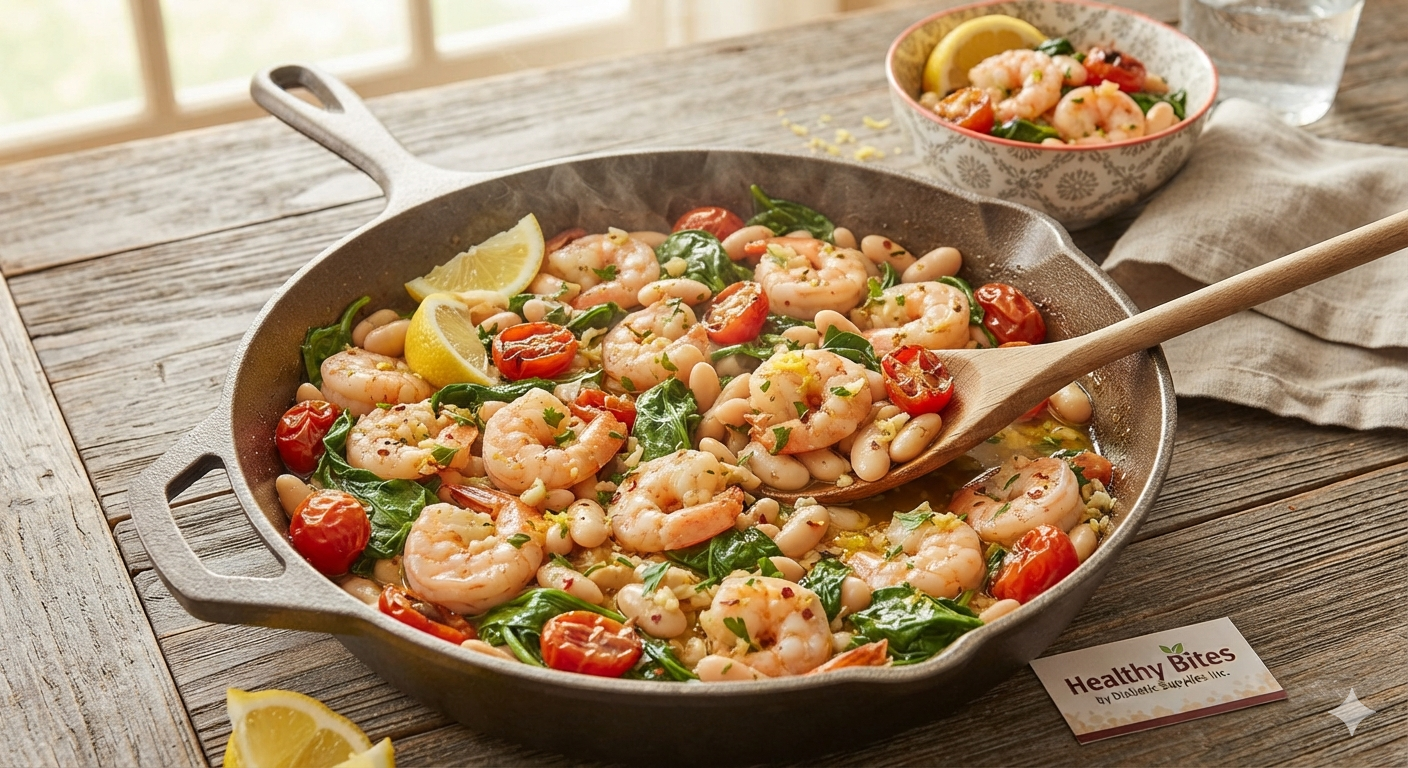
Looking for something fresh, flavorful, and easy enough for a busy weeknight? This Lemon-Garlic Shrimp & White Bean Skillet brings together tender shrimp, creamy white beans, colorful vegetables, fresh lemon, and garlic in one simple pan. It’s a great example of how a balanced meal can include protein, fiber-rich carbohydrates, vegetables, and healthy fats without sacrificing flavor. And the best part? You can have it on the table in about 25 minutes.
🛒 What You’ll Need
Ingredients
- 1 pound raw shrimp, peeled and deveined
- 1 can (15 oz) cannellini or Great Northern beans, drained and rinsed
- 2 cups fresh spinach
- 1 cup cherry tomatoes, halved
- 2 cloves garlic, minced
- 1 tablespoon olive oil
- 1 lemon, zested and juiced
- ¼ cup fresh parsley, chopped
- ½ teaspoon Italian seasoning
- ¼ teaspoon black pepper
- ¼ teaspoon red pepper flakes, optional
- 2 tablespoons water or low-sodium chicken broth
👩🍳 Let’s Get Cooking!
1. Prepare the Shrimp
Pat the shrimp dry with a paper towel. Season with Italian seasoning and black pepper.
2. Start the Skillet
Heat the olive oil in a large skillet over medium heat. Add the garlic and cook for about 30 seconds, just until fragrant. Add the cherry tomatoes and cook for 2–3 minutes, allowing them to soften.
3. Add the Beans
Stir in the drained white beans and 2 tablespoons of water or low-sodium chicken broth. Cook for about 3 minutes, stirring occasionally.
4. Add the Shrimp
Add the shrimp to the skillet and cook for approximately 2–3 minutes per side, or until the shrimp are opaque and cooked through. Avoid overcooking—the shrimp should be tender, not rubbery.
5. Add the Spinach
Add the fresh spinach and gently stir until it wilts, about 1–2 minutes.
6. Finish With Lemon
Remove the skillet from the heat. Add the fresh lemon juice, lemon zest, and parsley. For a little extra kick, sprinkle in the optional red pepper flakes. Give everything a gentle toss and serve warm.
🍽️ What’s on Your Plate?
One of the easiest ways to think about balanced meals is to look at what different foods are bringing to the plate.
- 🍤 Protein: Shrimp provides protein and helps make this meal satisfying.
- 🫘 Fiber + Carbohydrates: White beans provide carbohydrates along with fiber and plant-based nutrients. Remember: beans still contain carbohydrates, so the amount you eat can matter when you’re monitoring your blood glucose.
- 🥬 Non-Starchy Vegetables: Spinach and tomatoes add vegetables, color, flavor, and nutrients.
- 🫒 Healthy Fat: A small amount of olive oil adds fat and helps bring the ingredients together.
- 🍋 Flavor: Fresh lemon, garlic, parsley, and herbs add plenty of flavor without needing a heavy sauce.
🩸 What Does This Have to Do With Glucose?
When you live with diabetes, what you eat can affect your blood glucose. But there’s no single “perfect” diabetes meal, and different foods can affect different people differently. This skillet combines protein, vegetables, and fiber-rich beans in one meal. The beans do contain carbohydrates, so portion size is still important when considering your individual meal plan and glucose goals. If you use a continuous glucose monitor (CGM), you may also be able to see how your glucose responds to meals over time. Your own glucose patterns can be useful information to discuss with your healthcare team.
⚡ And What About Ketones?
Because ketones are an important part of our body’s metabolism, you may be wondering whether a particular meal can control or prevent ketones. The answer is not that simple. This recipe is not a treatment for high ketones and should not be used to prevent or treat diabetic ketoacidosis (DKA). Ketone levels can be affected by several factors, including having too little insulin, illness, dehydration, and other circumstances. If your healthcare provider has instructed you to monitor ketones, follow the testing and treatment instructions they have given you. If you have high ketones or symptoms that could indicate DKA—such as vomiting, abdominal pain, difficulty breathing, unusual tiredness, confusion, or fruity-smelling breath—seek medical attention promptly. Food is part of diabetes management, but it isn’t a substitute for medical treatment.
💡 Healthy Bites Tip
Don’t be afraid of carbohydrates—learn how to balance them. Carbohydrates are found in many nutritious foods, including beans, fruits, whole grains, and dairy products. Instead of thinking about carbohydrates as something you have to completely avoid, focus on building balanced meals and paying attention to portions. Pairing carbohydrate-containing foods with protein, fiber, and healthy fats can be one way to create a more balanced meal. And if you’re using a CGM, your glucose trends can give you information about how your body responds to different meals. The goal isn’t perfection. It’s learning what works for you.
🔄 Easy Swaps
Want to change things up?
- No shrimp? Try grilled chicken or another lean protein.
- Want more vegetables? Add zucchini, bell peppers, mushrooms, or broccoli.
- Don’t have white beans? Try chickpeas or another favorite bean.
- Want a little more flavor? Add fresh basil, oregano, or a squeeze of extra lemon.
- Want a little heat? Add red pepper flakes or a small amount of your favorite hot sauce.
🍋 Make It Your Own
The beauty of a skillet meal is that it doesn’t have to be complicated. Use the vegetables you already have. Adjust the herbs to your taste. Add a little more lemon if you like bright flavors. The goal is to create a meal that is simple, satisfying, and balanced—something you can actually see yourself making again.
❤️ Healthy Bites From Diabetic Supplies Inc.
At Diabetic Supplies Inc., we believe diabetes education doesn’t have to be complicated. Understanding your food, your glucose patterns, your medications, and your diabetes technology can all be part of learning how to manage diabetes day by day. So grab your skillet, squeeze some fresh lemon, and enjoy a meal that’s full of flavor. Eat well. Stay informed. Keep learning about your diabetes.
🩺 A Quick Reminder
This recipe is provided for general nutrition and educational purposes. It is not intended to diagnose, treat, or prevent diabetes, high blood glucose, high ketones, or diabetic ketoacidosis. Individual nutrition needs vary. If you have diabetes, follow the meal plan and medical guidance provided by your healthcare team. This is for informational purposes only. For medical advice or diagnosis, consult a professional. AI responses may include mistakes.